Affiliate Marketing vs Digital Products: How to Choose Without Overwhelm
Some links on this site may be affiliate links. This means I may earn a small commission at no extra cost to you. I only recommend tools and programs I genuinely believe are helpful for beginners.
If you’ve been trying to figure out how to make money online and feel like every option sounds equally confusing… you’re not behind. You’re just standing at a crossroads most beginners reach.
Some people swear by affiliate marketing.
Others say selling your own digital products is the “real” way to build sustainable income.
And meanwhile, you’re left wondering which path actually makes sense for you, your energy, and your life.
This post is designed to remove the noise.
By the end, you’ll understand:
- What affiliate marketing really is (beyond the hype)
- What selling digital products actually involves
- How they’re different — and how they overlap
- Why one may feel easier or safer depending on your personality
- How many creators quietly combine both
- What skills and tools you actually need (not what TikTok says you need)
- A clear, grounded next step you can take today
You don’t need to pick the “perfect” option.
You just need to pick a starting point that feels doable.
- Let’s Start With Some Basics
- What Is Affiliate Marketing?
- What Are Digital Products?
- Why This Appeals to Many Creators
- Affiliate Marketing vs Selling Digital Products: The Core Differences
- How They’re Actually Similar (Most People Miss This)
- Who Affiliate Marketing Is Best For
- Who Selling Digital Products Is Best For
- Skills & Tools You’ll Need (Without the Fluff)
- Can You Combine Affiliate Marketing + Digital Products?
- A Clear Path If You Don’t Want to Choose Blindly
- I Didn’t Start With “One Perfect Path” Either
- How to Decide Which Is Right for You (Right Now)
- Mini Summary
- Your Next Step (Without Overthinking It)
- Related Posts
Let’s Start With Some Basics
Before we compare anything, let’s start with some basics.
Both affiliate marketing and selling digital products:
- Are legitimate online income streams
- Require learning, patience, and consistency
- Can be done without showing your face
- Can start part-time, alongside a job
- Do not require you to be an expert on day one
Neither is a shortcut.
Neither is “passive” in the beginning.
Both reward people who focus on clarity over chaos.
If you’ve been feeling overwhelmed, that’s not a sign you’re failing.
It’s usually a sign you’ve been consuming too much information without a clear framework.

What Is Affiliate Marketing?
Affiliate marketing means you earn a commission by recommending someone else’s product or service.
You don’t:
- Create the product
- Handle customer support
- Process payments
- Manage delivery
Your role is simple:
Help the right person find the right solution — and earn a referral commission when they do.
Real-World Examples
- Recommending a course you took
- Sharing a tool you use daily
- Writing a blog post comparing two platforms
- Creating content that answers a specific problem, then linking a solution
Why Beginners Are Drawn to Affiliate Marketing
- Low startup cost
- No product creation
- Faster to launch
- Less technical setup
- Great for learning marketing fundamentals

The Trade-Off
- You don’t control the product
- You don’t control pricing
- You don’t own the customer relationship
- Income depends on traffic + trust
Affiliate marketing works best when paired with education-based content, not constant selling.
What Are Digital Products?
Digital products are something you create one (digitally) and can sell repeatedly.
Examples include:
- Guides & workbooks
- Templates
- Checklists
- Mini-courses
- Toolkits
- Digital planners
The key difference:
You own the product, the offer, and the customer experience.
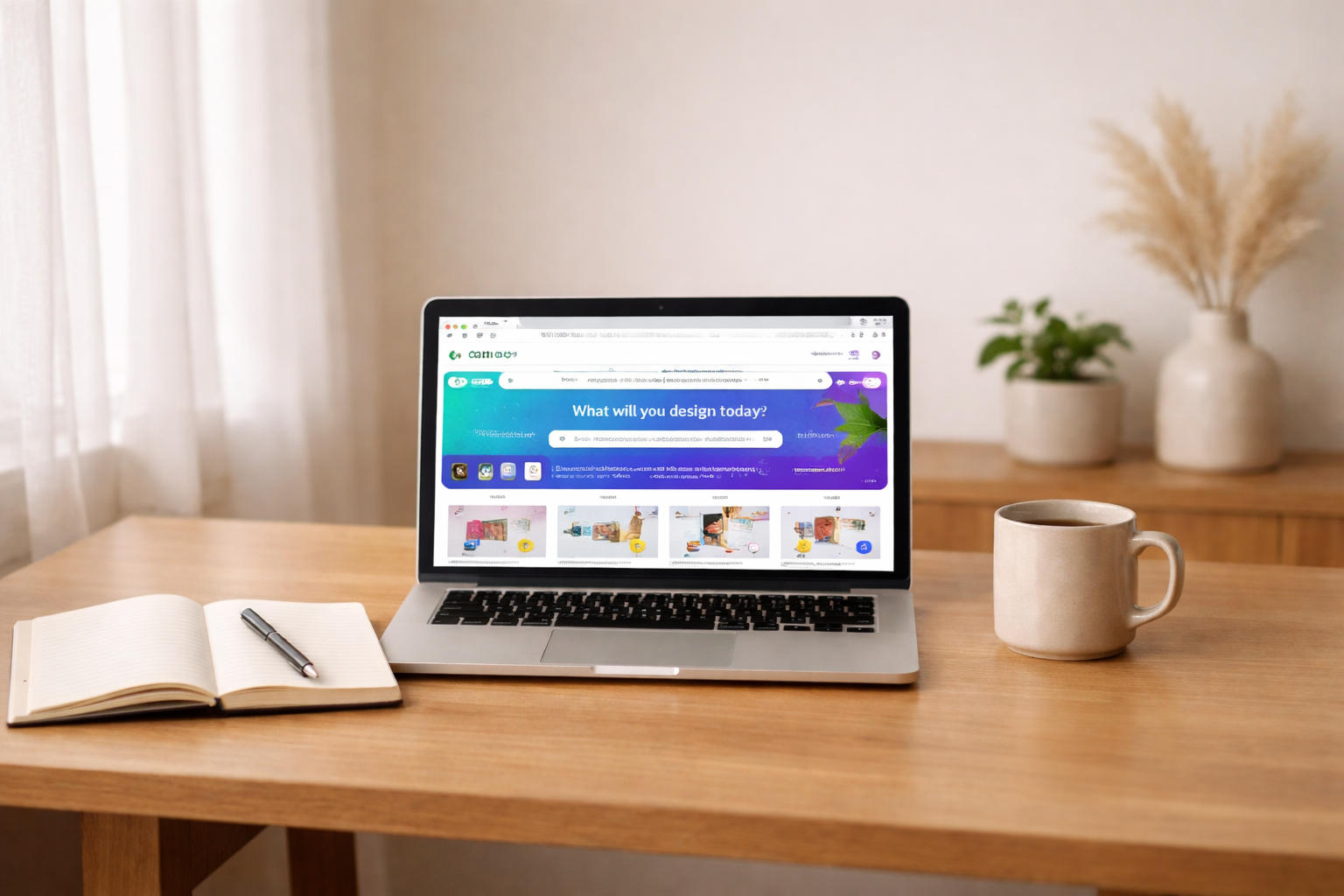
Creating digital products might sound like a lot of work, but honestly it’s really quite simple. I created this guide here to help you create your first digital product in under an hour if you’re interested it giving it a try. It walks you through how to use Canva and ChatGPT to create your first product as a complete beginner.
Why This Appeals to Many Creators
- Higher profit margins
- Full control over pricing
- Scales without trading time for money
- Builds a long-term business asset
The Trade-Off
- You need to create something upfront
- You’re responsible for clarity and results
- You must understand your audience’s problem
- Marketing still matters (a lot)
Digital products aren’t about being “creative.”
They’re about solving one clear problem well.

Affiliate Marketing vs Selling Digital Products: The Core Differences
| Area | Affiliate Marketing | Digital Products |
|---|---|---|
| Startup Cost | Very low | Low to moderate |
| Time to Launch | Faster | Slightly longer |
| Ownership | You promote others | You own everything |
| Income Potential | Commission-based | Scalable |
| Control | Limited | Full |
| Skill Focus | Marketing & trust | Problem-solving & clarity |
| Risk | Lower | Slightly higher |
| Best For | Beginners learning marketing | Builders ready to create |
Neither is “better.”
They simply reward different strengths.
How They’re Actually Similar (Most People Miss This)
This is important.
Both affiliate marketing and digital products rely on:
- Understanding your audience
- Clear messaging
- Trust-building content
- Consistent traffic
- Long-term thinking
If you struggle with clarity or consistency, both will feel hard.
If you focus on:
- One problem
- One audience
- One clear path
Both become manageable.
Who Affiliate Marketing Is Best For

Affiliate marketing tends to work best if you:
- Are just getting started
- Want proof that online income is possible
- Prefer recommending over creating
- Like research and comparison
- Want fewer moving parts at first
- Are learning how content + traffic work together
It’s especially helpful if you’re analytical and prefer systems over spotlight.
Who Selling Digital Products Is Best For
Selling digital products may be a better fit if you:
- Like organizing information
- Enjoy simplifying complex ideas
- Want full control over your offers
- Prefer long-term assets over one-off commissions
- Have solved a problem yourself and want to package the solution
You don’t need a big audience.
You need a clear outcome.
If you’d like some suggestions on what what types of products to start with, you can check out this post on the best evergreen digital products to create to help you get started.
Skills & Tools You’ll Need (Without the Fluff)
Skills That Matter for Both
- Basic digital marketing
- Understanding buyer psychology
- Clear writing
- Simple systems
- Patience
Affiliate Marketing Tools
- Blog or content platform
- Pinterest or search-based traffic
- Email list (eventually)
- Affiliate dashboards
- Analytics basics
Digital Product Tools
- Canva (for product creation)
- Simple checkout platform
- Email delivery or file hosting
- Customer clarity frameworks
You don’t need everything at once.
You need one working system.
Can You Combine Affiliate Marketing + Digital Products?
Yes — and many sustainable businesses do.
A simple example:
- Create free content around a problem
- Recommend tools or programs as affiliates
- Create a small digital product that supports or expands on that solution
Affiliate income builds confidence and cash flow.
Digital products build ownership and leverage.
This combination allows you to:
- Monetize at different readiness levels
- Serve beginners and committed learners
- Reduce pressure on any single offer
A Clear Path If You Don’t Want to Choose Blindly
One thing that makes this decision feel harder than it needs to be is that most people are trying to learn affiliate marketing and digital products from scattered sources — YouTube here, TikTok there, blog posts everywhere.
That’s exhausting.
If you want a structured way to learn both — without committing to the wrong path too early — this is where Digital Wealth Academy 3.0 can make a real difference.
What I appreciate about DWA 3.0 is that it doesn’t force you to pick one model and hope for the best.

Instead, it teaches:
- How affiliate marketing actually works (beyond posting links)
- How to create simple digital products that solve real problems
- How traffic, content, and monetization fit together
- How to start with one path and layer the other in later
- How to build something sustainable — not overwhelming
This matters because many beginners don’t fail due to lack of effort.
They stall because they don’t have a clear sequence to follow.
DWA 3.0 gives you that sequence, without needing a big audience, fancy tech skills, or constant visibility.
I Didn’t Start With “One Perfect Path” Either
When I first started trying to make money online, I didn’t wake up knowing whether affiliate marketing or digital products was “the right choice.”
I actually began by creating Canva templates and selling them on Etsy. At the time, it felt like the most realistic option — I could work quietly, create once, and test ideas without needing to put myself out there.
But even with a business diploma, I still felt stuck.
I understood concepts like marketing and strategy, but I didn’t have a clear pathway that showed me how everything connected — traffic, content, offers, and income. I knew I didn’t want to spend my life stuck behind a desk, and I wanted the flexibility to build something I could take anywhere… but I didn’t know how to move from “side project” to something sustainable.
That’s where things finally started to click for me.
Instead of trying to force myself into one model too early, I learned how affiliate marketing and digital products actually work together — and how you can start with one while building toward the other.
Affiliate marketing helped me understand:
- How to communicate value
- How people make buying decisions
- How traffic and content work behind the scenes
Digital products gave me:
- Ownership
- Creative control
- A way to package what I’d already learned into something helpful for others
What made the biggest difference wasn’t choosing the “better” model — it was having a clear structure to follow instead of piecing things together from random advice.
That’s why I often recommend Digital Wealth Academy for beginners who feel torn.
Not because it tells you what to choose, but because it lets you learn both, gain confidence, and then decide based on what actually fits you.
If you’ve been feeling unsure, overwhelmed, or like you should have this figured out by now, you’re not behind.
You’re just at the stage where clarity matters more than speed.
How to Decide Which Is Right for You (Right Now)

Ask yourself:
- Do I want to create or recommend?
- Do I want speed or ownership?
- Do I want fewer decisions or more control?
- Am I building confidence or scaling assets?
Your answer today doesn’t lock you in forever.
It simply gives you momentum.
Mini Summary
- Affiliate marketing is ideal for learning and low-risk entry
- Digital products offer ownership and scalability
- Both require clarity, not hustle
- Many creators combine both over time
- The best choice is the one you’ll actually follow through on
Your Next Step (Without Overthinking It)
You don’t need to master everything at once.
You need a starting point that feels clear and doable.
If you’re still deciding between affiliate marketing and selling digital products, the safest next step is learning both inside a structured framework — then letting your strengths guide you forward.
That’s exactly why I recommend Digital Wealth Academy.
It’s not about doing more.
It’s about having a path you can actually follow.
If you’ve been waiting for a sign to stop guessing and start building with intention — this is it.
Let me know in the comments which one you’ll be starting with, digital products or affiliate marketing?









Leave a Reply