How to Start a Profitable Faceless Lifestyle Blog in 2025

A Sweet and simple guide to getting started in 2025
Disclosure: This post contains affiliate links. I may receive a commission if you make a purchase through these links, at no extra cost to you. I only recommend things I genuinely find helpful for faceless bloggers like you!
Do you want to start a lifestyle blog but don’t love the idea of being front and center? You’re not alone and the good news is, you don’t have to be. Plenty of bloggers make real money without ever showing their face or sharing personal details. In this post, I’ll walk you through how to start a faceless lifestyle blog, step by step.
What is a Faceless Lifestyle Blog?
A faceless lifestyle blog is a space where you share tips, ideas, and inspiration without revealing your identity. No real name, no selfies, no personal info. You can use a pen name or just stick with a brand name. The focus is on your content like routines, product finds, life hacks, or wellness tips not on you as a personality.
This post you’re reading right now is an example of a faceless blog. I may only be sharing insights about my life here and there in my posts, but I do view my blog as at least partially a lifestyle blog. For me, my main focus is on helping other women to get started with blogging and to help them monetize so they can free themselves from their 9-5. At the same time, I’m on the same journey myself testing strategies, learning what works, and sharing my own experiences when they connect to the topic at hand.
In general, faceless blogging is a great option if you’re a private person, camera-shy, or just want to keep your job and blog life separate. There’s nothing wrong with staying behind the scenes while still sharing your wisdom and experiences in order to help others.
Why Start a Faceless Lifestyle Blog?
There are a lot of great reasons to start a faceless lifestyle blog. Some of the top reasons are:
- Privacy: You don’t have to share your personal life or photos.
- Creative freedom: Write about what you love without pressure.
- Future flexibility: Easier to sell or scale if it’s not tied to your real identity.
- Time-saving: No need for photoshoots or being on camera.
- Keep things simple: No filming, editing, buying props or staging shots.
Personally, my main motivation for going the faceless blog route is that I have ZERO desire to be an influence or someone who is well-known on the internet. It’s just not my thing. I feel a lot more comfortable sharing my experiences and knowledge from a distance. The other great thing is it saves me from over-analyzing things like how my hair looks, if my outfit is “professional” enough, and what makeup looks best. For me, running a blog is enough work without having to make things more complicated than they need to be.
Can You Really Make Money with This?
Another question you’re likely asking is “Can I actually make money doing this? The answer is absolutely. Many faceless lifestyle blogs bring in $100–$10,000+ per month through ads, affiliate links, and digital products. The key is creating content people are actually searching for and offering them helpful, easy-to-digest solutions to their problems. This can be in the form of product/ service reviews (monetized through affiliate links), having helpful niche-specific ads on your site, or creating and selling some sort of template, download, or course aimed at helping your readers.
“Never give up on a dream just because of the time it will take to accomplish it. The time will pass anyway.” – Earl Nighting
How long it takes to start making money from your blog can vary greatly. It really depends on the niche, the quality of the content you’re offering, how well you’re driving traffic (SEO/Marketing), and how well you can establish a connection and trust with your readers. In general, though, it can take anywhere from 3 months to over a year of consistent effort to start monetizing your blog. It can be a slow, dull process, but if you stick with it, you’ll get where you want to be.
Here are 6 Steps for Getting Started
Step 1: Choose Your Lifestyle Focus
Some lifestyle blog topics that work well faceless, as well as some post ideas:
- Minimalist living – Tips on getting started, digital minimalism, pros & cons, minimalist travel
- Home organization – De-cluttering, tips & tools for organizing the house, creating a schedule that works
- Self-care routines – Nightly winddown routine, meditation, somatic exercises, mobility stretches
- Budget-friendly decor – Where to find great decor for cheap, how to restore old furniture, DIY project ideas
- Wellness tips – How to eat healthy on the road, easy at-home workouts,
- Product roundups – Top 10 products that save time, products to avoid, products worth the hype
- Productivity tips – Optimizing your daily schedule, organizing for efficiency, creating a chore chart
- Sustainable living – How to start a compost, growing your own food in an apartment
When trying to decide what niche(s) you want to cover, ask yourself what kind of lifestyle tips you want to share. What problems have you solved for yourself that others might be struggling with? What are you naturally good at or interested in? By asking these questions, you can narrow down what topics will be the easiest for you to write about.
Once you narrow it down, it’s important to look at Pinterest or Google Trends to see what’s in demand. This way, you’ll be creating content that people are actually looking for, which makes it much easier for you to monetize when you’re ready. If you feel like there’s more than one topic that you would really enjoy talking about, then that’s perfectly fine. Having multiple tops can be a great way for you to add more value to your readers as long as they’re within the same niche.
Step 2: Pick a Blog Name & Domain
When it comes to picking your blog name, it should be something simple, memorable, and relevant to your lifestyle focus. Tools like Namecheap can help you check domain availability.
Another good idea is to do a quick search for any blog names you’re considering on social media sites and check Gmail, Outlook, etc, to see if the name is also available on these platforms. This way, you can keep your name consistent across all platforms and prevent your readers from being confused when trying to follow you outside of your blog.
One more thing to keep in mind when choosing a domain name is that generally, people trust a .com or .ca domain more than other less-used domains such as .biz, .site, or .ai. It doesn’t mean you can’t use a different domain ending, but some people might be less likely to choose it in a list of search results.
Step 3: Set Up Your Blog
WordPress is one of the most common sites for creating a blog and is the one I use. I like it because it’s easy to use, and different plug-ins can be added to meet your unique needs, whether you just want just a blog or you want to sell things as well. Aside from WordPress, you’ll need hosting (Bluehost, SiteGround, or Hostinger, etc.) and a clean, mobile-friendly theme.
I use Hostinger and I have only good things to say about it so far. I love it because it’s a great all-in-one tool. I have my domain name and my business email through them, and they take care of security updates and back up my data daily, so I don’t have to worry about it. Plus, it was only $53.89USD for the first year, so I’m not mad about that. I’ve set up other WordPress sites in the past, and it was much easier going through Hostinger.
Some Helpful plugins to look into are:
- Yoast SEO for optimization
- WP Super Cache for faster load times
- Site Kit by Google to track your stats
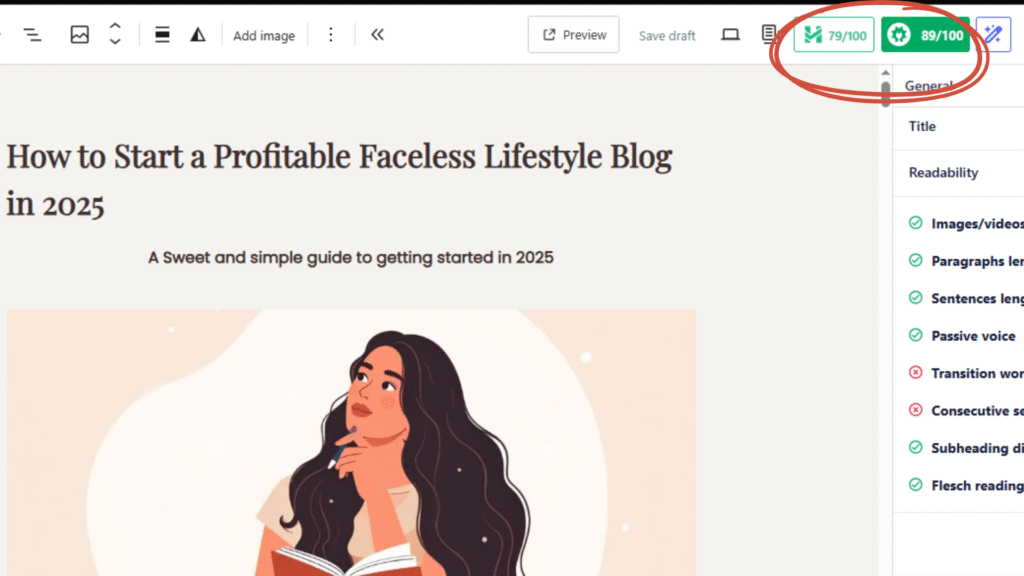
I would also recommend All In One SEO if you’re looking to create a Pinterest account for your blog and want to claim your website through Pinterest. Claiming your website on Pinterest will give you access to more analytics, and claimed websites are prioritized in search results, which helps improve your visibility. Another Great feature of this plugin is that it will give you insights into how optimized your post title and content are and what you can do to improve them while you’re writing your posts.
Step 4: Maintaining Your Privacy
If privacy is you’re main reason for choosing a faceless blog, here are some ways to stay anonymous:
1. Turn on domain privacy when registering your site
When you buy a domain name (like yourblog.com), your personal information, such as your name, address, and phone number, can be publicly available through a database called WHOIS.
To protect your identity, make sure you select “domain privacy” or “WHOIS protection” during registration. This replaces your details with your registrar’s information, keeping your identity hidden from the public eye.
2. Use a blog-only email address
Instead of using your personal email, create a new email just for your blog (like hello@yourblog.com or yourblogname@gmail.com).
This helps keep your personal and blogging lives separate and adds an extra layer of security, especially if you’re signing up for affiliate programs, plugins, or newsletters.
3. Stick to stock or AI-generated photos
To keep your face (and personal life) out of your content, use high-quality stock images or AI-generated visuals.
There are plenty of free and paid stock photo sites available, or you can use tools like Adobe Firefly or DALL·E to create your own custom images that fit your brand—no selfies required. You can also take your own photos, but just be sure there’s no personal information in the frame.
4. Avoid linking to personal social media
This is an obvious one, but if you’re trying to remain anonymous, avoid linking your blog to your personal Instagram, Facebook, or LinkedIn.
Instead, consider creating dedicated social accounts just for your blog if you want to build a social presence without revealing your identity. Pinterest is a really great place to promote your blog, and it’s already a very friendly platform for faceless content.
5. Use a P.O. Box if needed for contact info
Some services (like email marketing platforms) legally require a mailing address in your email footer. If you’re uncomfortable using your home address, consider renting a P.O. Box from your local post office or a mailbox service.
Step 5: Write Helpful Content

Don’t worry about writing like a pro. The most important thing is to identify what it is your target audience needs and deliver them content that will provide them with real value. You don’t have to be the most eloquent speaker (or typer). If you’re having trouble getting started or organizing your thoughts, I highly recommend using something like ChatGPT to help.
Avoid copy and pasting everything ChatGPT gives you into WordPress and hitting publish to try to put out as much content as you can as quickly as you can. If you use AI to help you write your posts, always take the time to read through it, change things as needed so it’s in your tone of voice, and check facts if you’re not sure. Putting out content is great, but it needs to be of good quality if you want to build something that will last. Posting too frequently can also hurt your SEO by making your site appear to be spammy.
Speaking of posting frequency, post weekly if you can. If you can’t, don’t beat yourself up about it. Pick a posting schedule that works for you and do your best to stay consistent with it. Also, make sure your posts are easy to read. Use headings, short paragraphs, bullet points, or lists where possible, and make it skimmable.
To find out what you’re readers are looking for, you can Google/ ask ChatGPT what are common pain points for people in your niche, look for Reddit posts within your niche for common questions people have, and search these topics on Google Trends to get a sense of how often people are searching for this content.
Step 6: Get Traffic (No Face Needed)
There are plenty of ways to get readers to your blog without doing silly dances or cringy lip-syncing on TikTok (no offence to those who do it!). Here are some tried-and-true methods:
1. Pinterest – Create eye-catching pins with Canva
Pinterest is basically a visual search engine, which means your posts can get discovered months—or even years—after you publish them.
Use Canva (the free version works great!) to design pins that make people want to click. Focus on bold text, scroll-stopping images, and colors that match your blog’s vibe. Pin regularly and link each pin back to your blog post for long-term traffic.
2. SEO – Use keywords people are searching for
Search Engine Optimization (SEO) is how you get found on Google without paying for ads.
Research what your audience is actually typing into search bars (using tools like Ubersuggest, AnswerThePublic, or even Google’s autocomplete), and weave those keywords naturally into your blog posts. As mentioned before, AIOSEO is also a great plugin to add to save time optimizing your SEO. Over time, SEO helps your site climb search rankings and attract readers who are already interested in your content.
3. Email list – Offer a freebie and send weekly tips
Social media algorithms change all the time, but your email list is yours forever.
Encourage visitors to sign up by offering a free resource (like a checklist, mini eBook, or printable) in exchange for their email address. Then, keep in touch with friendly weekly updates, tips, or extra content they won’t find on your blog. This builds trust and keeps readers coming back.
4. Guest posts – Write for other lifestyle blogs to build your audience
Guest posting is like borrowing someone else’s audience for a day.
Find blogs in your niche that accept guest contributors, and pitch them a valuable, well-written post. In your author bio, include a link back to your site or freebie. This not only drives new readers your way but also boosts your credibility and SEO.
5. Repurpose your content
Last but not least, turn one blog post into multiple pieces of content!
For example, break it into Instagram carousel slides, a LinkedIn article, or a short YouTube tutorial. Repurposing means you’re working smarter, not harder, and it helps you reach people on different platforms without constantly creating new material from scratch.
Step 7: Start Monetizing
Once your blog has a few posts and some steady traffic, you can start monetizing your blog. Here are the most common ways people monetize their blogs:
- Affiliate marketing: Recommend products you love.
- Display ads: Join networks like Google AdSense or Mediavine.
- Digital products: Sell checklists, planners, or guides.
- Sponsored content: Brands love working with lifestyle bloggers (even faceless ones!)
Monetizing your blog is a big step! It’s the step most of us are all too eager to reach. However, I truly believe that to be successful, the top priority should always be to serve your readers. To me, that means only recommending products and services that I have tried myself and would buy again. It also means writing posts with my readers and their needs in mind, vs. how many affiliate links can I fit in one post. Making money is great, but if you focus more on making great content, the money will come on its own. You won’t have to chase it.
Final Thoughts
You don’t have to be on camera to build a lifestyle brand. With helpful content, a smart strategy, and a consistent posting schedule, you can grow a faceless lifestyle blog that feels fulfilling and brings in an income.
Ready to start yours? Drop your blog name idea or niche in the comments. I’d love to hear from you!









Leave a Reply